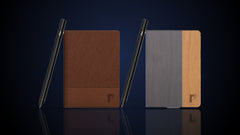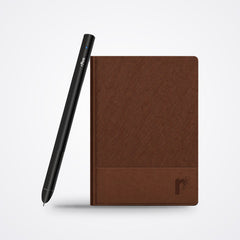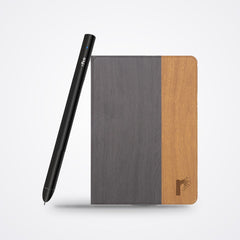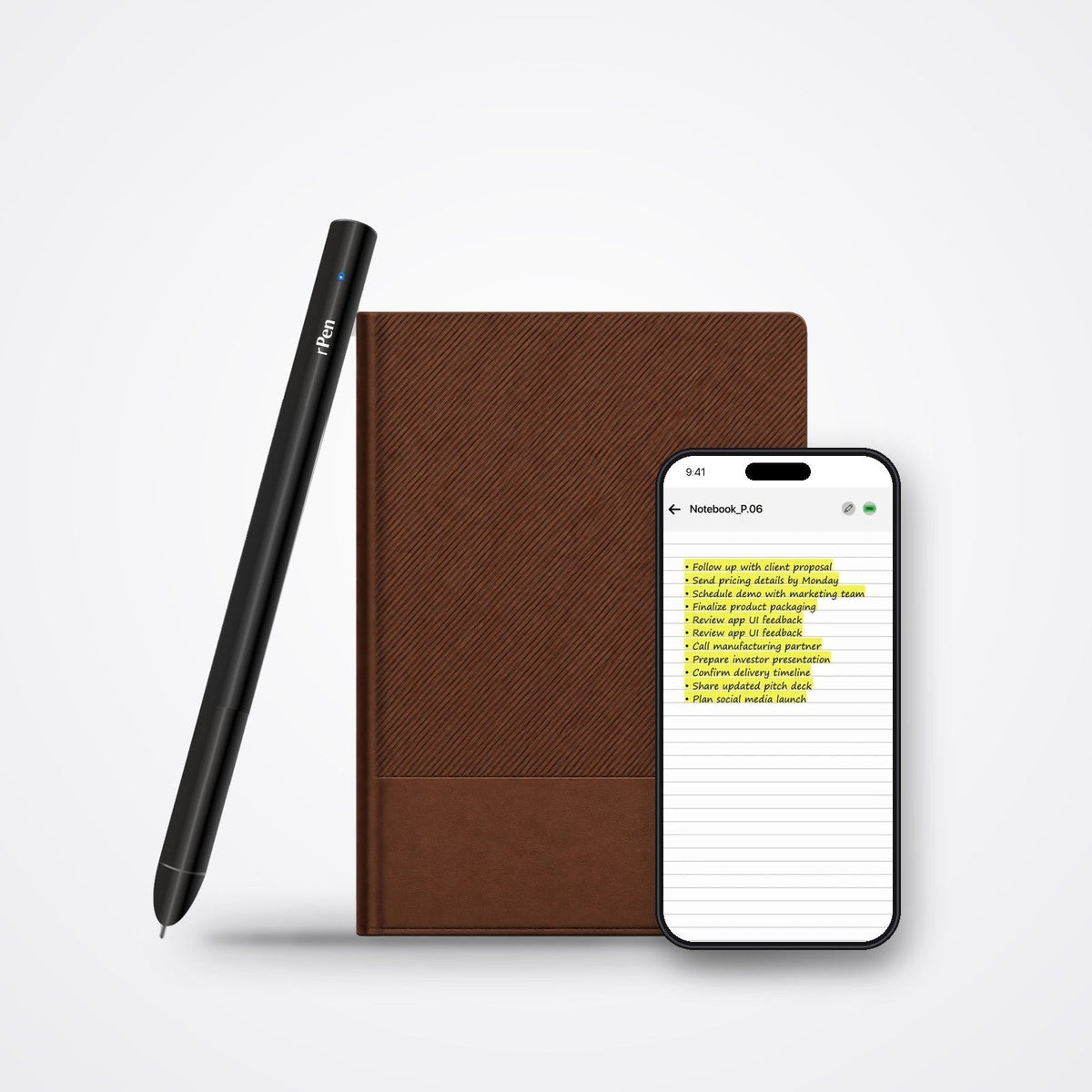
Desify sells rPen, one of the options below. We have tried to be fair to every product, and the prices are list prices we checked in October 2026.
In December 2025 BIC, which owned Rocketbook, announced it was discontinuing the business and winding it down by early 2026. Rocketbook's own update said notebooks would be sold while supplies last and that the app would be supported for at least a year after BIC's exit. If you have built a habit around Rocketbook, this is a good moment to decide what comes next before your last notebook runs out.
What Rocketbook did well
Rocketbook made a simple promise: write on reusable pages, take a photo with the app, send the scan to your cloud, then wipe the page clean. It was cheap, it worked with any phone, and it kept people writing by hand. That is why it still shows up in almost every "best smart notebook" list.
Its limits were the same ones you probably noticed. You have to remember to scan. Scans are photos, so searching your notes depends on how well the app reads your handwriting from a picture. Erasable ink smudges. And nothing happens with the note after it is saved: a to-do written on a page stays a picture of a to-do.
Your options, from cheapest to most capable
| Option | Typical US price | How notes reach your phone | Best for |
|---|---|---|---|
| Another reusable notebook | $20 to $40 | You scan each page with a phone app | Students on a budget who scan rarely |
| Plain notebook + phone scanning app | Under $15 | You photograph pages | Occasional capture |
| Basic smart pen (Neo, Ophaya and similar) | About $60 to $140 | Live, as you write | Digitizing notes without AI extras |
| AI smart pen (rPen, XNote) | $175 to $199 | Live, as you write, then AI turns notes into text, tasks and emails | People who act on their notes: meetings, classes, planning |
| Paper tablet (reMarkable, Kindle Scribe) | $399 to $679 | You write on a screen | People happy to swap paper for an e-ink screen |
Why a smart pen is the natural next step
A smart pen keeps the part of Rocketbook people love, which is writing on paper, and removes the part they forget, which is scanning. The pen sees what you write and sends it to the app in real time. There is no photo, no lighting problem and no stack of pages waiting to be captured.
The trade-off is paper. Smart pens read a fine dot pattern printed on their own notebooks, so you buy refills from the pen maker instead of wiping pages. In return you get permanent ink, a real notebook you can keep, and a digital copy that is searchable from the moment you write.
What to check before you switch
- Paper and refills. Ask what refills cost and whether the brand sells printable pages.
- Offline memory. A good pen stores hundreds of pages when your phone is not nearby.
- What happens after the note. Can it become a calendar event, a task or an email draft, or does it just sit in an app?
- Export. Make sure you can export your notes, so you are never locked in again.
- Subscriptions. Check what is free and what is paid after any trial.
Questions people ask
Can I still buy Rocketbook notebooks?
Rocketbook said products would remain on sale while supplies last after BIC's exit. Availability may vary by retailer, so check before you rely on refills.
Will my old Rocketbook scans be safe?
Export everything you care about to your own cloud storage now. That protects your notes whatever happens to any app.
Do smart pens work on any paper?
Most, including rPen, need their own patterned paper. That pattern is how the pen knows exactly where it is on the page.
Is a smart pen worth it over a reusable notebook?
If you scan less than once a week, probably not. If you take notes daily and want them searchable and actionable without extra steps, yes.